
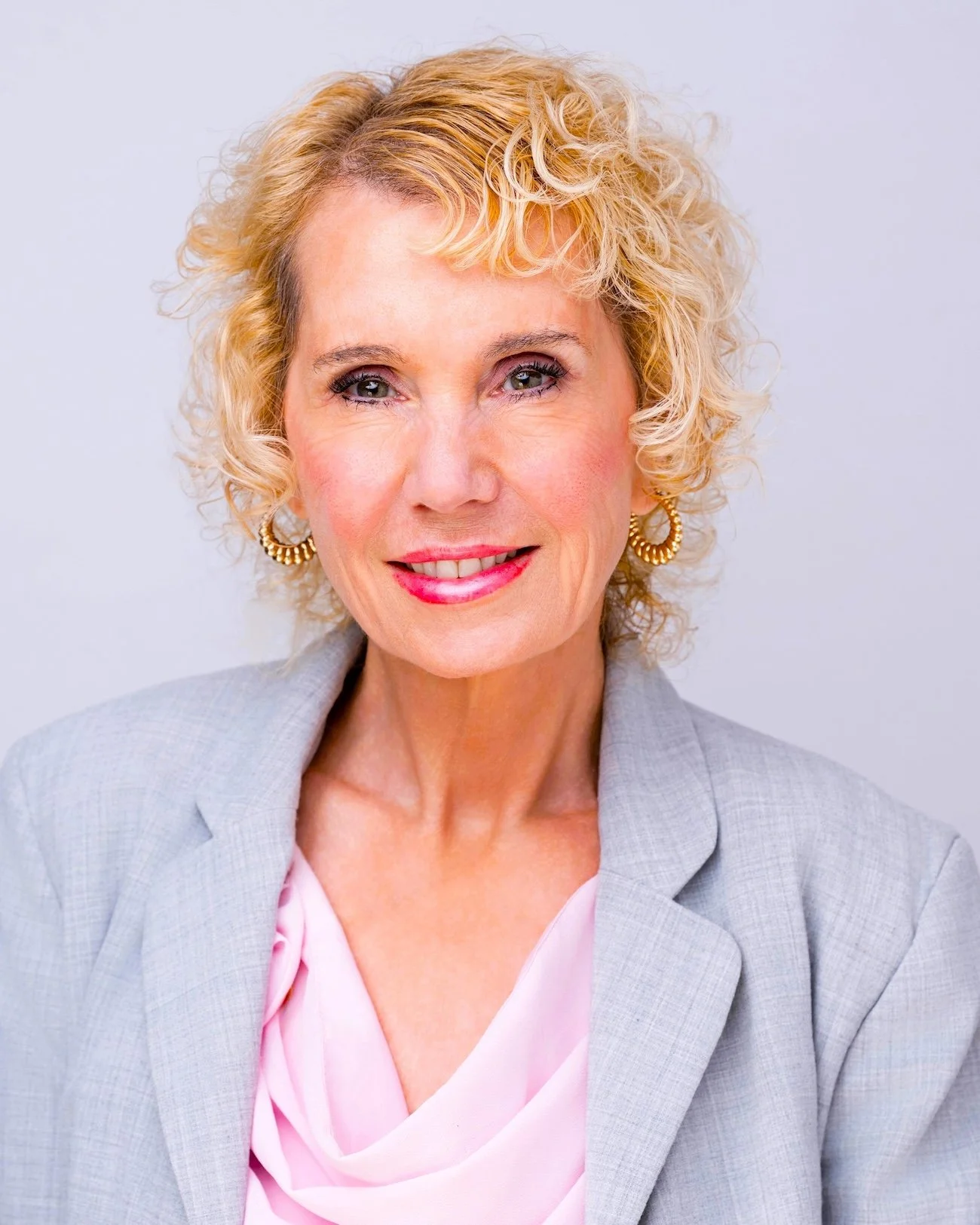
About Kymberlee O'Brien, MEd, PhD
20+ Years in Psychophysiology, Neuroscience & NeuroLeadership
For over two decades, I've worked at the intersection of human biology and high-stakes performance. I began as a Research Assistant at Harvard's Health and Psychophysiology Lab, progressing to Co-Investigator and then Principal Investigator — conducting funded research on autonomic nervous system function, stress reactivity, and intergroup psychophysiology — while simultaneously completing my doctorate at Brandeis University.
That trajectory — from nascent scientist to research director to leadership consultant — is the foundation of NeuraLight™.
My work is grounded in a simple but profound observation: the story leaders tell about their own performance rarely matches what their biology is actually recording. NeuraLight™ exists to close that gap.
My work isn't purely academic. As a singer-songwriter, my original song "Love Is Gonna Do Another Day" reached the Grammy ballot for Best Pop Solo Performance at the 67th Annual Grammy Awards — a reflection of a career built around a single theme: resilience. In the lab, on the stage, and in the consulting room, the question is always the same. What does it actually take to keep going — and what does that cost?
Credentials & Training
PhD in Social Psychology, with specializations in Neuroscience and Psychophysiology — Brandeis University
Master of Arts in Education — Fitchburg State College
Advanced Certificates in Statistical Analysis — Data Analysis Training Institute of Connecticut, UConn
Harvard University — Research Assistant, Co-Investigator, and Principal Investigator, Health and Psychophysiology Lab and Kennedy School Decision Sciences, 2005–2010. Under the direction of Dr. Wendy Berry Mendes.
Postdoctoral Fellow in Developmental Psychobiology — UMass Boston, under Drs. Celia L. Moore and Edward Tronick, 2011–2014.
Over 400 clinical-grade hair cortisol preparations. 1,000+ biospecimen preparations and interpretations. Extensive EEG, HRV, and psychophysiological mappings across community, clinical, and laboratory settings.
Select Awards & Recognition
American Psychological Association Dissertation Award, 2010
Brandeis Provost Dissertation Award, 2010
Brandeis Prize Instructorship — outstanding graduate student course design, 2009
Harvard Sackler Scholar in Psychobiology, 2011–2012
NIH Loan Repayment Program for Research in Health Disparities, 2012–2014
American Psychological Foundation Visionary Award, 2013–2015
SPSP Small Grant Award, 2016
NIH Biomedical Grant — epigenetic investigation of social devaluation, 2018–2020
Massachusetts Cultural Council Grant — Brain Fitness Across Multiple Domains, 2024–25
Grammy ballot — Best Pop Solo Performance, 67th Annual Grammy Awards, "Love Is Gonna Do Another Day"
The NeuraLight™ Methodology
I founded NeuraLight™ Consulting to bridge the gap between academic neuroscience and executive performance. Using a proprietary biomarker interpretation framework I developed across 20 years of neuroscience and psychophysiology research, I map five neural domains — Resilience, Stress Action and Recovery, Executive Functioning, Emotion Regulation, and Prosociality — into a precise biological profile.
One biomarker or all five. Every data point tells a story.
"In high-performance environments, we cannot manage what we do not measure. Most leaders are operating on gut feeling while their biology is recording a different story. I provide the map that allows them to navigate their own physiology with the same precision they use to navigate their business."
— Kymberlee O'Brien, PhD, MEd
Teaching
I hold a faculty position in an Organizational Leadership Psychology doctoral program, where I teach Functional Neuroanatomy, Neuroscience of Leadership Lab, Advanced Neuroscience Seminar, Clinical Statistics, and Clinical Consultation — bringing the same precision neuroscience framework into the next generation of leadership researchers and practitioners.
From Lab to Leadership
NeuraLight™ is not coaching dressed up in neuroscience language. It is the neuroscience — translated into tools that leaders, organizations, and doctoral researchers can actually use.
Whether you're seeking a precision biometric assessment, a keynote that puts live biology on screen, or a doctoral workshop in functional neuroanatomy, NeuraLight™ meets you where your data does.
Press:
Her writing on stress physiology has appeared in Newsweek:
The Newsweek Op-Ed on the dual hormone hypothesis at play during the World Cup. High pressure is not just a matter of character; the neurobiology tells a different story.https://lnkd.in/g5_maQ6e
Recognised Expertise & Awards
NeuraLight™ Consulting has received accolades for its innovative approach to neuroscience research and leadership development. Kymberlee has been recognised with American Psychological Foundation Visionary Award, the NIH NLP Award for work in Health Disparities and the Harvard Sackler Scholar Award in Psychobiology — among the most competitive honours in psychophysiology research.

From Lab to Leadership
NeuraLight™ is not coaching dressed up in neuroscience language. It is the neuroscience — translated into tools that leaders, organisations, and doctoral researchers can actually use. Whether you are seeking a precision biometric assessment, a keynote that puts live biology on screen, or a doctoral workshop in functional neuroanatomy, NeuraLight™ meets you where your data does.


Ready to know what your biology is actually telling you?
Start with the data of your cells.